
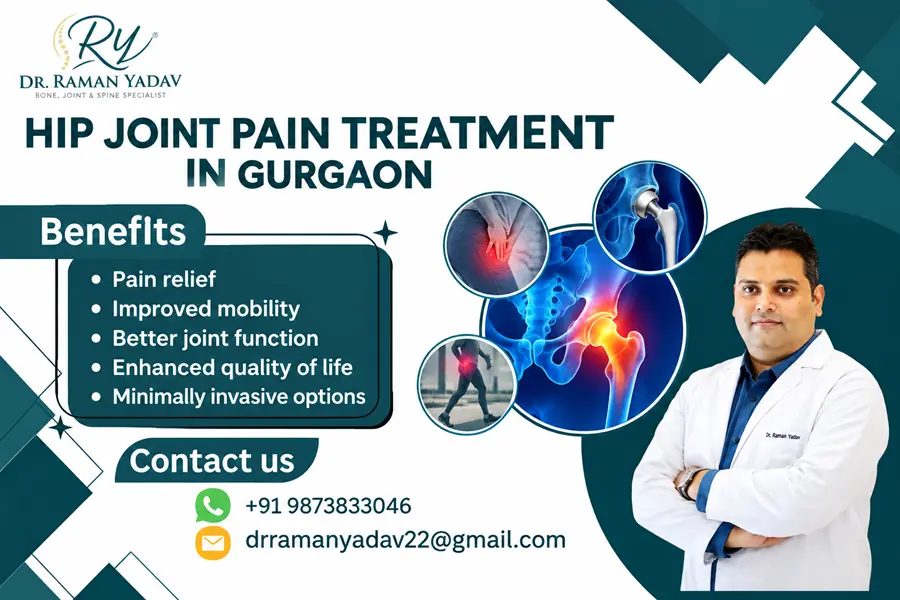
Hip pain can affect walking, climbing stairs, sitting, sleeping, and everyday movement. The discomfort may come from the hip joint itself, surrounding muscles and tendons, bursae, or even the lower back. Because different conditions can produce similar symptoms, identifying the actual source of pain is important before choosing treatment.
Hip Joint Pain Treatment in Gurgaon may involve activity modification, physiotherapy, medicines, targeted injections, nerve procedures, or other minimally invasive approaches depending on the underlying cause and severity. Early evaluation can help prevent persistent pain from interfering with daily life.
Dr. Raman Yadav, Pain Specialist, provides evaluation and pain-management treatment for conditions including hip pain, back pain, neck pain, sciatica, and frozen shoulder. The treatment approach is tailored according to the patient’s symptoms, examination findings, and diagnostic results.
What Causes Hip Joint Pain?
Hip Joint Pain Treatment in Gurgaon starts with determining what is causing the pain. Hip discomfort does not always originate from the hip joint. Problems involving nearby soft tissues, nerves, the pelvis, or lumbar spine can sometimes feel like hip pain.
Common causes include:
Hip Osteoarthritis
Hip osteoarthritis occurs when the protective cartilage within the joint gradually wears down. It can cause groin pain, stiffness, reduced movement, and discomfort while walking or standing for long periods.
Greater Trochanteric Pain Syndrome
This condition causes pain on the outside of the hip and may involve irritation or degeneration of the gluteal tendons and inflammation of the nearby bursa. Pain may become worse when lying on the affected side, walking upstairs, or standing for prolonged periods.
Hip Bursitis
Bursae are small fluid-filled structures that reduce friction around joints. Irritation of the bursa around the hip can cause localized tenderness and pain, particularly when pressure is applied to the affected side.
Hip Labral Tear
The labrum is a ring of cartilage around the hip socket. A tear may cause deep groin pain, clicking, catching, or discomfort during twisting and rotational movements.
Avascular Necrosis
Avascular necrosis occurs when the blood supply to the femoral head becomes compromised, potentially leading to bone damage. Persistent hip or groin pain and difficulty walking may occur.
Referred Pain From the Lower Back
Lumbar spine conditions, including nerve compression, can produce pain that extends toward the buttock, hip, or leg. In these situations, treating only the hip may not address the underlying problem.
Hip Pain Symptoms and Diagnosis
Recognizing the pattern of symptoms can help determine whether the pain is coming from the hip joint or another nearby structure. Hip Joint Pain Treatment in Gurgaon should be based on an appropriate clinical assessment rather than symptoms alone.
Common Symptoms
Patients with hip-related problems may experience:
- Pain in the groin, hip, buttock, or outer thigh
- Stiffness after sitting or resting
- Pain while walking or climbing stairs
- Difficulty getting up from a chair
- Reduced hip movement
- Difficulty putting on shoes or socks
- Pain when lying on the affected side
- Limping or changes in walking pattern
- Clicking or catching sensations
- Pain that may extend toward the thigh or knee
Persistent or worsening pain, difficulty bearing weight, significant loss of movement, or pain following an injury should be evaluated by a healthcare professional.
How Is Hip Pain Diagnosed?
Diagnosis usually begins with a detailed medical history and physical examination. The doctor may assess walking, hip movement, muscle strength, and specific movements that reproduce the pain.
Depending on the findings, investigations may include:
- X-rays: To evaluate joint-space narrowing, bone changes, and osteoarthritis.
- MRI: To assess cartilage, labral tears, tendons, bone changes, and other soft-tissue abnormalities.
- Ultrasound: To evaluate certain tendons and bursae and to guide selected injections.
- Diagnostic injections: In selected cases, an injection into a specific structure can help determine whether that structure is responsible for the pain.
A careful diagnosis is particularly important when hip pain overlaps with symptoms from the lower back or sacroiliac region.
When Should You Consult a Pain Specialist?
Consider an evaluation when hip pain persists despite rest or basic treatment, interferes with sleep or mobility, repeatedly returns, or limits work and daily activities. Prompt assessment is particularly important after significant trauma or when severe pain is accompanied by an inability to bear weight.
Hip Joint Pain Treatment in Gurgaon: Procedures, Benefits and Recovery
The appropriate treatment depends on the diagnosis, severity of symptoms, age, activity level, medical history, and previous treatments. Hip Joint Pain Treatment in Gurgaon may be conservative initially, while selected patients may benefit from minimally invasive pain-management procedures.
Non-Surgical Hip Treatment
Non-Surgical Hip Treatment aims to reduce pain and improve movement without immediately proceeding to surgery. Depending on the condition, treatment may include:
- Activity modification
- Physiotherapy and strengthening exercises
- Weight management when appropriate
- Medicines prescribed by a qualified healthcare professional
- Targeted injections
- Nerve blocks
- Radiofrequency-based pain procedures in selected cases
- Regenerative treatments in appropriately selected patients
Non-surgical treatment does not mean that every patient can avoid surgery. Advanced joint degeneration, structural damage, fractures, or other conditions may require assessment by an appropriate surgical specialist.
Hip Joint Injections
A targeted hip joint injection may be considered when pain is associated with inflammation or osteoarthritis. The injection is directed into the joint and may contain a corticosteroid and local anaesthetic, depending on the clinical situation.
The purpose is to reduce pain and inflammation and potentially improve function. The expected duration of benefit varies from person to person.
Greater Trochanteric Bursa Injection
For pain originating from the greater trochanteric region, an image-guided injection may be considered. Accurate placement can help target the painful structure while reducing unnecessary treatment of unrelated areas.
Nerve Blocks and Radiofrequency Procedures
Some patients with chronic hip pain may have pain involving specific sensory nerves. A diagnostic nerve block can sometimes help determine whether a particular nerve is contributing to symptoms.
In carefully selected patients, radiofrequency ablation may subsequently be considered for longer-lasting pain relief. The suitability of the procedure depends on the underlying diagnosis and individual clinical assessment.
Benefits of Targeted Pain Management
Potential benefits of appropriately selected minimally invasive treatment include:
- Targeted treatment of the suspected pain generator
- Reduction in pain intensity
- Improved mobility and daily function
- Potential reduction in reliance on pain medication
- Avoidance or postponement of surgery in selected patients
- Usually shorter recovery than major surgical procedures
The results are not guaranteed, and treatment benefits vary according to the underlying condition.
Recovery After Treatment
Recovery depends on the procedure performed and the underlying cause of the hip pain. Many minimally invasive procedures allow patients to return to routine activities relatively quickly, although temporary soreness may occur.
Patients should follow the treating doctor’s instructions regarding activity, exercise, wound care, and medication. Physiotherapy may be recommended to improve strength, flexibility, balance, and movement mechanics.
Hip Joint Pain Treatment in Gurgaon: Comparison of Treatment Options
There is no single treatment that is appropriate for every type of hip pain. Hip Joint Pain Treatment in Gurgaon may range from conservative management to minimally invasive procedures or surgery.
| Treatment approach | Common purpose | Recovery considerations |
| Physiotherapy | Strength, flexibility and mobility | Gradual improvement |
| Medication | Pain and inflammation control | Depends on medication |
| Joint injection | Selected joint-related pain | Usually limited downtime |
| Bursa injection | Lateral hip/bursal pain | Usually short recovery |
| Nerve block | Diagnostic or therapeutic pain relief | Generally short downtime |
| Radiofrequency procedure | Selected chronic nerve-mediated pain | Recovery varies |
| Surgery | Significant structural disease | Usually longer recovery |
The choice should be based on the diagnosis rather than simply selecting the least invasive option.
Frequently Asked Questions
1. What is the most common cause of hip pain?
Osteoarthritis is a common cause of pain originating from the hip joint, particularly in older adults. However, tendon, bursa, nerve, and spine-related conditions can also produce hip-area pain.
2. Can hip pain be treated without surgery?
Yes. Non-Surgical Hip Treatment can be effective for many conditions. Options may include physiotherapy, medication, targeted injections, nerve procedures, and lifestyle modifications depending on the diagnosis.
3. How do I know whether my pain is coming from my hip or back?
Hip-joint pain is commonly felt in the groin and may worsen with hip movement. Back-related nerve pain may extend from the lower back or buttock into the thigh or leg. A clinical examination helps distinguish between these conditions.
4. Are hip injections safe?
Hip injections are commonly performed for selected conditions, but they are not suitable for everyone. Potential risks depend on the type of injection, underlying medical conditions, medications, and the specific structure being treated.
5. How long does relief from a hip injection last?
The duration varies considerably. Some patients experience short-term relief, while others may have longer-lasting improvement. The underlying condition and response to treatment influence the outcome.
6. Is physiotherapy useful for hip pain?
Physiotherapy can help improve strength, flexibility, joint movement, and functional ability. The exercises should be selected according to the underlying diagnosis and the patient’s physical condition.
7. Can hip pain be caused by sciatica?
Yes. Sciatica and other lumbar nerve problems can cause pain in the buttock, hip region, thigh, or leg. Proper assessment is important to distinguish referred pain from a primary hip condition.
8. When is surgery considered for hip pain?
Surgery may be considered when there is significant structural damage or advanced disease and appropriate non-surgical treatments have not provided adequate improvement. The decision requires assessment by the relevant specialist.
9. Can chronic hip pain affect walking?
Yes. Persistent pain can cause a person to change their walking pattern to reduce discomfort. Over time, this may affect surrounding muscles and other joints.
10. Who should I consult for persistent hip pain in Gurgaon?
A pain specialist can evaluate persistent musculoskeletal pain and determine whether interventional pain management may be appropriate. Dr. Raman Yadav provides pain-management care for hip pain as well as back pain, neck pain, sciatica, and frozen shoulder.
Conclusion
Persistent hip pain should not be ignored, particularly when it affects walking, sleep, exercise, or routine activities. The source may be osteoarthritis, a tendon or bursa problem, a labral injury, nerve-related pain, or a condition originating in the lower back.
Hip Joint Pain Treatment in Gurgaon should therefore begin with an accurate diagnosis and an individualized treatment plan. For suitable patients, Non-Surgical Hip Treatment and minimally invasive pain-management procedures may help reduce symptoms and improve mobility.
Dr. Raman Yadav is a Pain Specialist providing evaluation and treatment for hip pain, back pain, neck pain, sciatica, and frozen shoulder. If persistent hip pain is affecting your daily life, schedule a consultation to discuss the cause of your pain and appropriate treatment options.
Book an appointment with Dr. Raman Yadav for personalized evaluation and pain-management care in Gurgaon.